
Quality Indicators
CORR Annual Statistics 2023: Quality Indicator Provincial Comparisons
CSN QUIS collaborated with the Canadian Organ Replacement Register (CORR) on national quality indicators with a view to a national QI scorecard for nephrology. CSN QUIS identified 9 indicators for provincial benchmarking, working with the Canadian Senior Renal Leaders group and patient partners. CORR completed a feasibility assessment, and 4 indicators met reliability criteria and were prioritized for public release.
- % patients with an eGFR <9.5 mL/min/1.73m2 at dialysis start,
- % patients on home dialysis within three months of dialysis initiation
- % prevalent dialysis patients who received a kidney transplant
- # of kidney transplants per year by province/territory of treatment/follow-up
Indicators are reported publicly at the provincial level. Hospital/Program level data is available to individual programs via CORR. Contact corr@cihi.ca for more info.
View the abstract that was published at the 2024 CSN AGM on the collaboration between CORR and CSNQUIS.
CORR is a pan-Canadian information system managed by the Canadian Institute for Health Information (CIHI).
CORR collects data from hospital dialysis programs, transplant programs, organ donation organizations (ODOs), and independent health facilities to track patients from their first treatment for end-stage organ failure (dialysis or transplantation) to their death.
CORR produces in-depth reports and analyses on long-term trends in organ transplants, organ donation, and dialysis in Canada. This pan-Canadian comparative data can be used to enhance patient care, quality improvement, and research.
Quality Indicators are dependent on the measurable aspects of care. Other names include quality metrics, performance metrics, or key performance indicators (KPIs). Quality Indicators must be clearly defined with a numerator and denominator. Systematic measurement of quality indicators in relation to defined objectives is one of the most important ways to improve quality of care.
Common reasons for variability across indicators across provinces:
- Differences in patient populations due to demographics, geography, or other factors (rural vs. urban, ethnicities, socioeconomic status)
- Differences in health care delivery due to resource constraints
- Data accuracy, underreporting, and limitations within different health care systems
Indicator 1
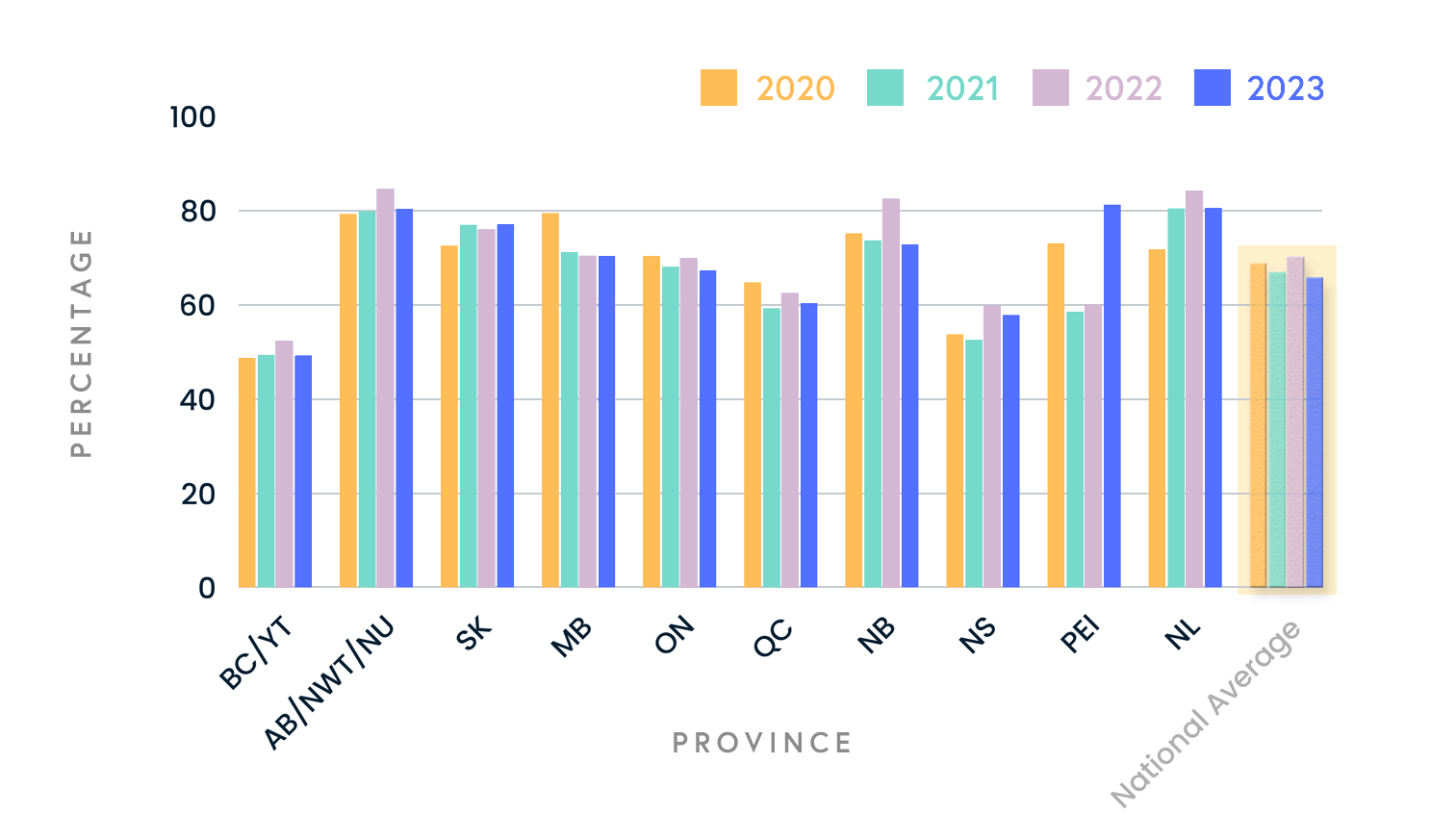
Indicator 1: Incident dialysis patients starting with an eGFR <9.5 ml/min (by province/territory in Canada, percentage)
Graph
Table
Why it's important
Starting dialysis too early does not improve health outcomes for patients. Research shows that starting dialysis too early negatively affects patients’ quality of life and is associated with higher health care costs.
Indicator 2
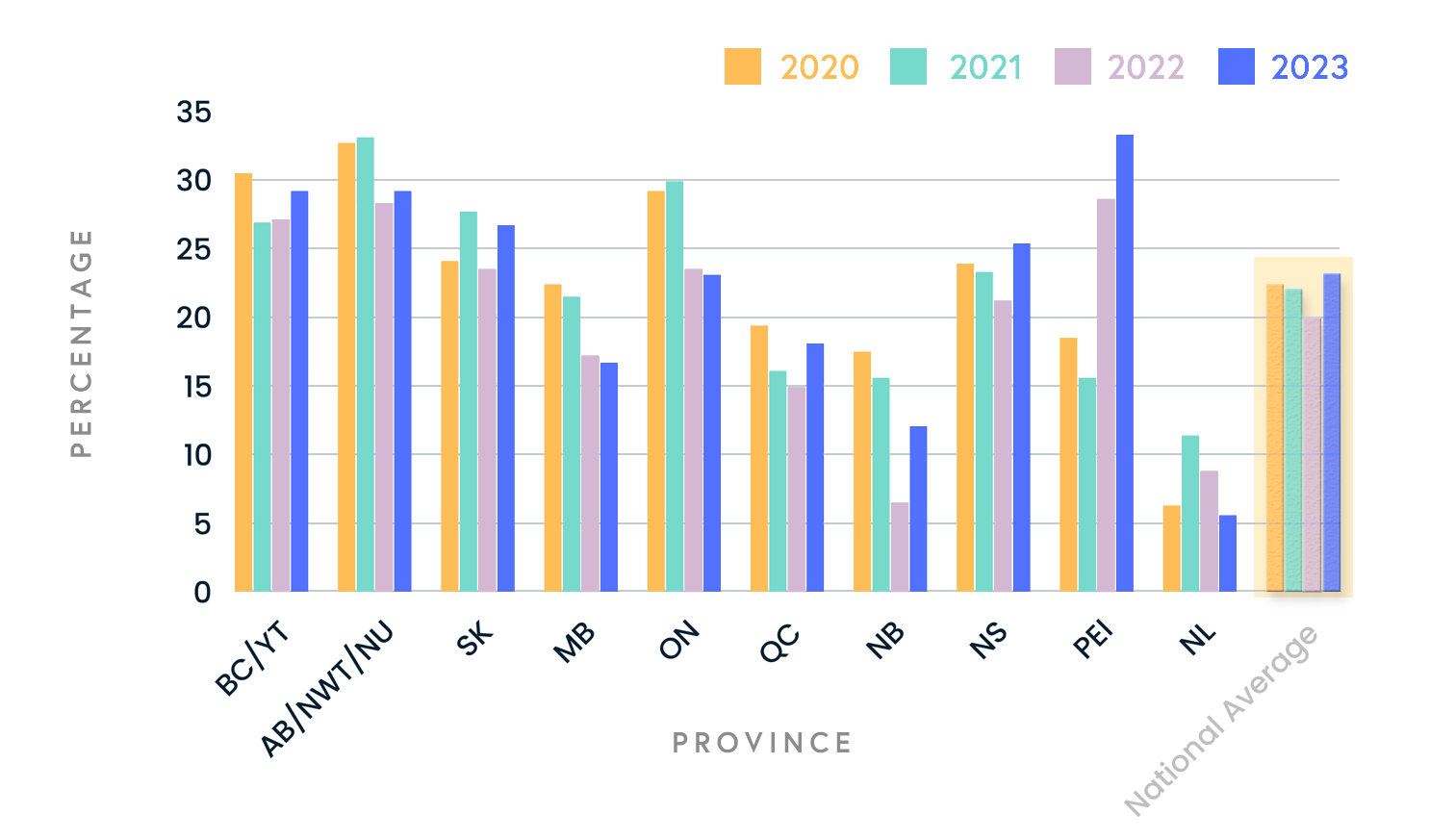
Indicator 2: Incident dialysis patients receiving home dialysis within 3 months of dialysis initiation (by provinces/territory in Canada, percentage)
Graph
Table
Why it's important
Home dialysis can improve quality of life for patients and provide effective dialysis at a similar mortality rate to HD. Home dialysis may also preserve residual renal function for patients and reduce health care costs.
Indicator 3
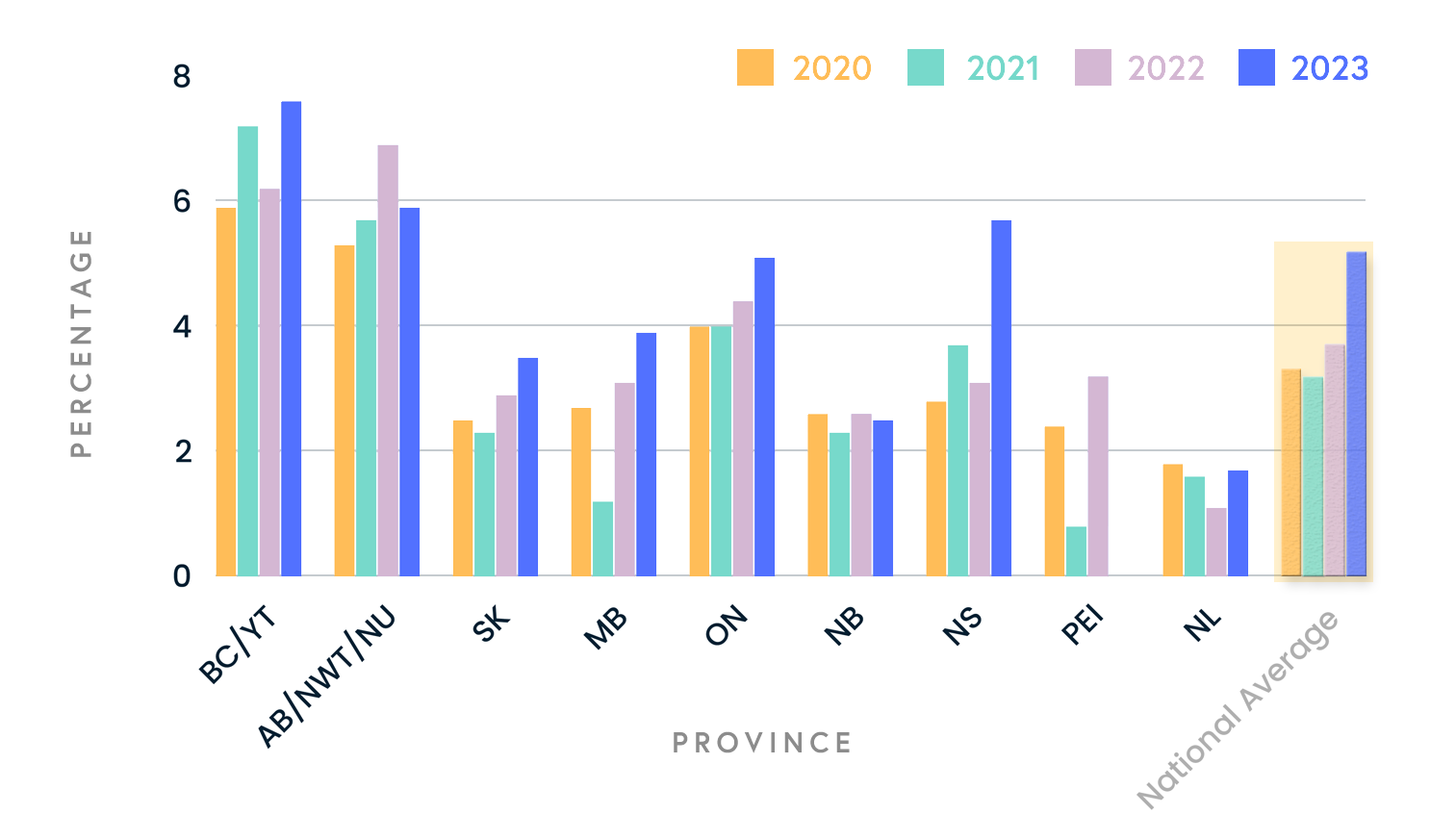
Indicator 3: Prevalent dialysis patients who received a kidney transplant by province/territory of treatment/follow-up, Canada (percentage). Data from Quebec was excluded from this table because of significant under-reporting of transplant data between 2012 and 2023.
Graph
Table
Why it's important
For eligible patients, kidney transplant is associated with improved quality of life, independence and a longer life expectancy for many. It is important that eligible dialysis patients are referred and listed for potential kidney transplant. The number of transplants occurring also reflects efforts to improve donation, both living and deceased donors.
Notes
Dialysis data from Quebec is reported where possible for 2020 to 2022; dialysis data from Quebec between 2011 and 2019 is excluded due to significant under-reporting during this time. Kidney transplant data from Quebec was not consistently included in these data tables because of significant under-reporting between 2012 and 2022, which may lead to biased results. Where possible, results from Quebec were supplemented with aggregate data from Transplant Québec.
Population estimates used to calculate rates per million population and other information regarding analytical methods can be found in Canadian Organ Replacement Register — Methodology Notes and Supplementary Information, 2013 to 2022.
Information regarding missing data and data quality can be found in Data Quality Documentation for Users: Canadian Organ Replacement Register, 2013 to 2022 Data.
Indicator 4
Indicator 4: Number of kidney transplants per year by province/territory of treatment/follow-up
Disclaimer: CSN is sharing previously published data from CIHI’s Canadian Organ Replacement Register (CORR) with permission. CSN does not interpret or modify the data from CORR. Canadian Institute for Health Information. Treatment of End-Stage Organ Failure in Canada, Canadian Organ Replacement Register, 2014 to 2023: Dialysis and Pre-emptive Kidney Transplant — Data Tables. Ottawa, ON: CIHI; 2024. For more information on the data, please contact corr@cihi.ca.
